The 30-second version
- A time off policy is broader than a PTO policy.
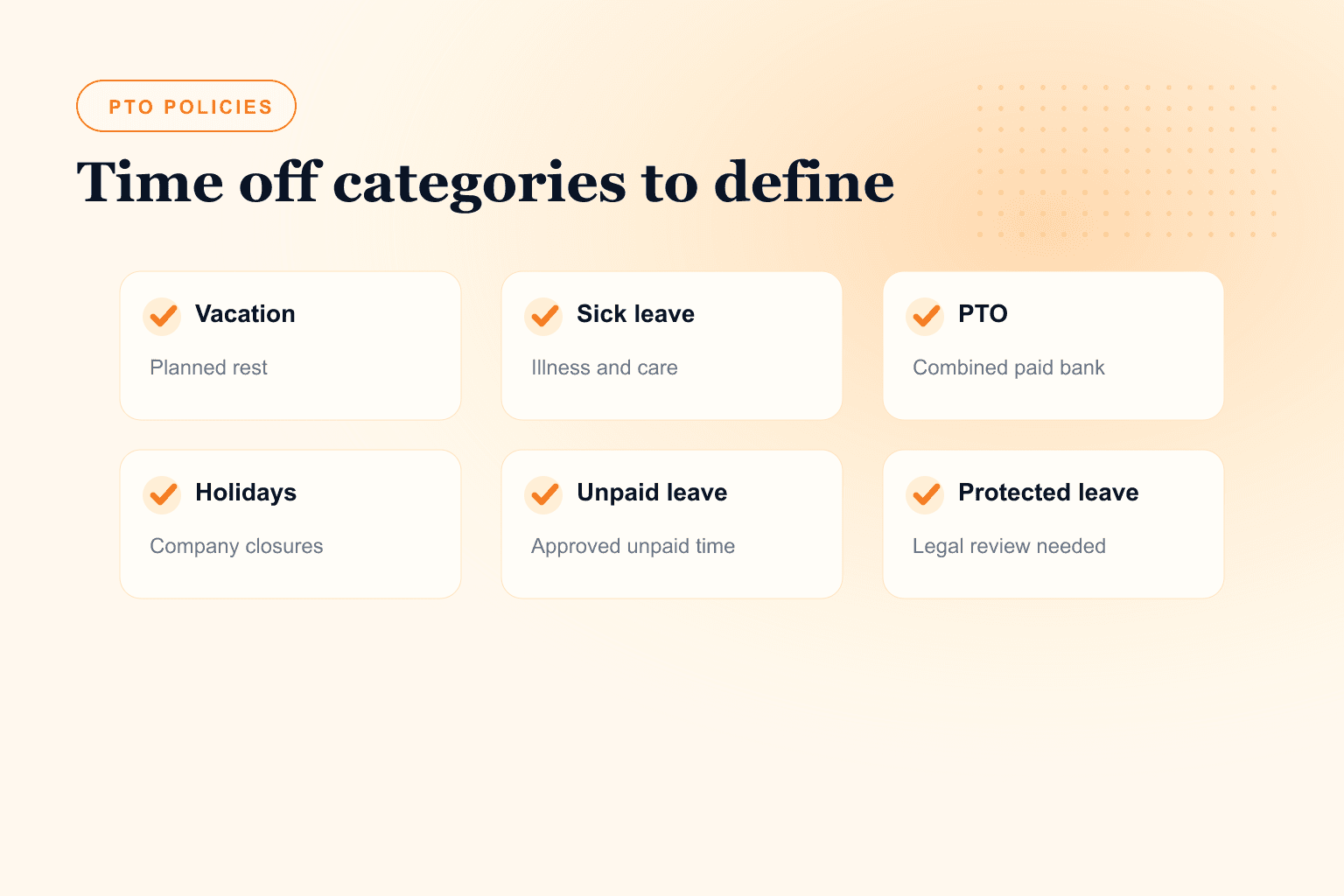
- It should cover vacation, sick leave, holidays, unpaid leave, protected leave, and approvals.
- Small businesses should keep the policy short, but not vague.
- Separate sick leave can be easier to administer than one combined bucket.
- Use the small-business PTO policy guide for the paid-time-off section.
A time off policy answers every version of "can I be away from work?"
Vacation is only one piece. Employees also need to know what happens when they are sick, when a holiday falls on a workday, when they need unpaid leave, or when a legally protected leave applies.
What to include
A small-business time off policy should include:
| Area | What it answers |
|---|---|
| PTO or vacation | How much paid time employees receive and how they request it. |
| Sick leave | Whether sick time is separate and how it accrues or is granted. |
| Paid holidays | Which holidays the company observes. |
| Unpaid leave | When unpaid time off may be approved. |
| Protected leave | Where employees can find rules for legally protected absences. |
| Approvals | Who approves time off and how coverage is handled. |
| Tracking | Where balances and approved absences are recorded. |
This does not need to become a giant handbook chapter. It just needs enough structure that managers are not inventing rules.
PTO and vacation
For paid vacation or PTO, define the amount, eligibility, earning method, and carryover rule.
A simple example:
Full-time employees receive 15 days of PTO per year. PTO may be used for vacation, personal time, or other approved absences. Requests should be submitted at least two weeks in advance when possible.
For deeper guidance, see paid time off policy for small business.
Sick leave
Sick leave is where small businesses should be careful. Many states and cities have paid sick leave requirements. Even when you offer a combined PTO bank, local rules may still affect accrual, permitted use, and documentation.
If you are unsure, keep sick leave separate from vacation. That makes the policy easier to explain and easier to audit.
Holidays
List the holidays your business observes. If you offer floating holidays, explain how they are requested and whether unused floating holidays carry over.
Small teams often use 8 to 10 company holidays per year. Some add a year-end closure week if operations allow it.
Unpaid time off
Unpaid time off should not be improvised. Explain when it is available, whether employees must use PTO first, who approves it, and how it affects benefits or employment status.
Use unpaid time off policy for small business for the dedicated version.
Approval and tracking
The approval workflow is what makes the policy real.
State where employees submit requests, who approves, how conflicts are resolved, and where approved absences appear. A spreadsheet can work for a tiny team, but it breaks when balances, carryover, and overlapping requests start to matter.
How Cabana handles this
Put the whole time-off workflow in Slack.
Cabana helps small teams request time off, approve it, track balances, and see who is out without creating another HR admin system.
30 days · No credit card
Bottom line
A time off policy should be broad enough to cover the real reasons people miss work and simple enough for managers to use.
Start with PTO, sick leave, holidays, unpaid leave, and approvals. Then review it annually as your team and state footprint change.