The 30-second version
- Unpaid time off covers approved absences when an employee has no paid balance available or the reason is outside your PTO policy.
- Define eligibility, approval authority, documentation, maximum duration, and benefit impact.
- Keep protected leave separate from ordinary discretionary unpaid time off.
- Require written approval so managers do not create inconsistent side deals.
- Connect this policy back to your broader PTO policy for small business.
Unpaid time off is where informal policies create the most confusion.
An employee uses all their vacation days, then needs another week away. Someone asks for a personal leave. A manager says yes once, then no to someone else. Without a written policy, every request feels like a negotiation.
What unpaid time off means
Unpaid time off is an approved absence that is not paid through PTO, vacation, sick leave, or another paid leave benefit.
It is not the same as protected leave. FMLA, paid sick leave, pregnancy leave, disability accommodation, military leave, and state-specific leave rules may carry legal obligations. Treat those separately and get professional guidance when needed.
This article focuses on ordinary discretionary unpaid time off for small businesses.
What to include in the policy
Your unpaid time off policy should cover:
| Section | What to define |
|---|---|
| Eligibility | Who can request unpaid leave and after what waiting period. |
| Reasons | Whether personal, family, travel, education, or emergency reasons are allowed. |
| Approval | Who approves requests and what criteria they use. |
| Duration | Maximum unpaid time off per year or per request. |
| Benefits | Whether benefits continue during unpaid leave. |
| Documentation | When written explanation or supporting documents are required. |
| Return to work | Expectations for returning on the agreed date. |
The goal is not to make every request impossible. The goal is to make decisions consistent.
Sample unpaid time off language
Employees may request unpaid time off when they do not have available PTO or when the reason for leave is not covered by another company leave policy. Unpaid time off must be approved in writing by the employee's manager and [HR/contact].
Approval depends on business needs, team coverage, the length of the requested absence, prior time off, and applicable law. The company may deny discretionary unpaid time off requests when they create an undue burden on operations.
Employees are expected to return to work on the approved return date. Failure to return without communication may be treated as job abandonment, subject to applicable law.
Customize this before using it. Benefits continuation, protected leave, and state rules need careful review.
How unpaid time off interacts with PTO
Decide whether employees must use available PTO before unpaid time off begins.
Many small businesses require employees to use available PTO first. That keeps paid balances from accumulating while someone is away without pay. Other businesses allow employees to preserve PTO for planned vacation and approve unpaid leave separately.
Either approach can work, but the policy should say it clearly.
Approval rules matter
Unpaid time off can feel personal, so managers may be tempted to handle it quietly. That is risky.
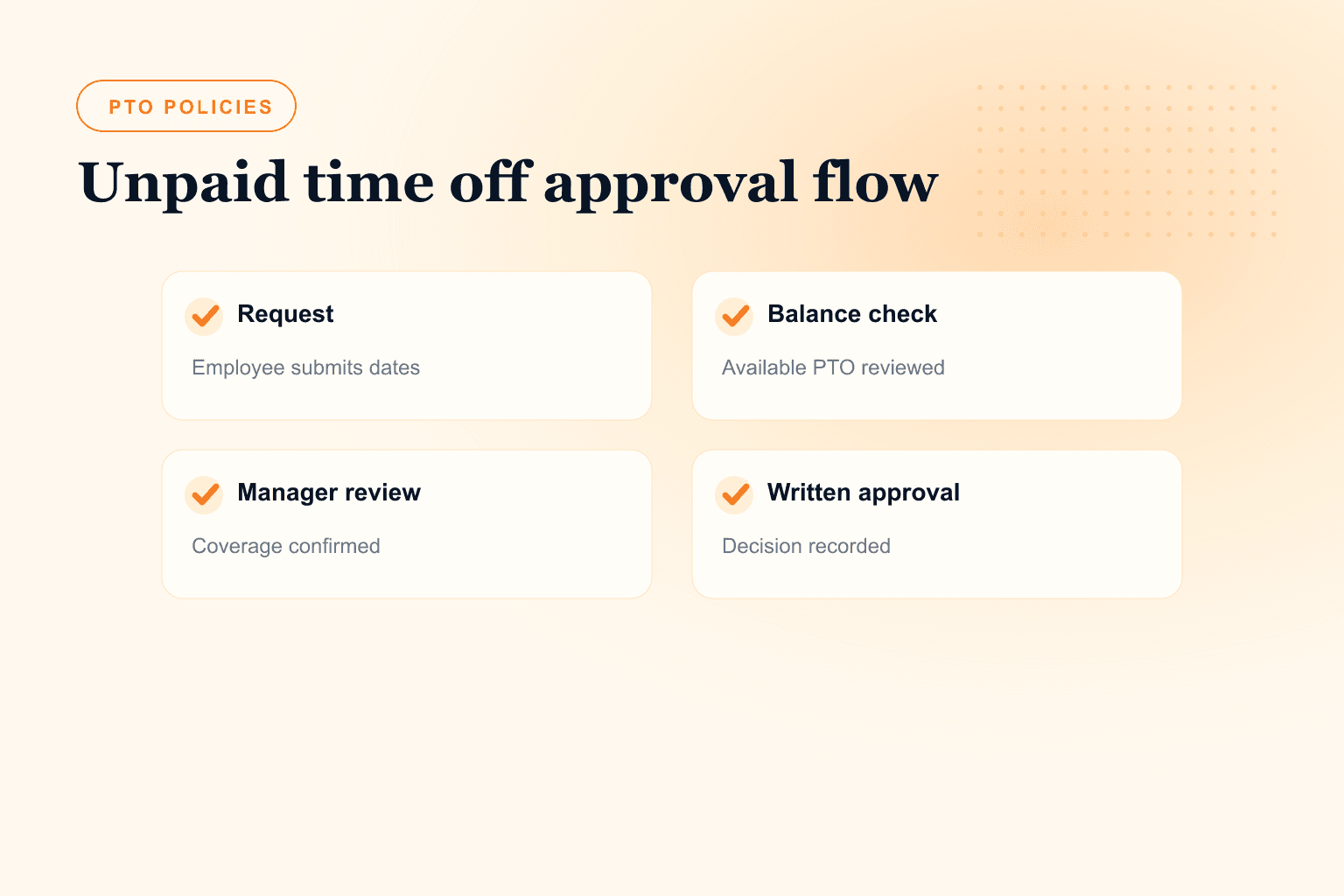
Require a written request and written approval. Keep the criteria consistent. If you make an exception, document why. This protects the employee, the manager, and the business.
For the paid side of the policy, see paid time off policy for small business.
How Cabana handles this
Keep paid and unpaid time off visible.
Cabana helps small teams keep PTO requests, approvals, and balances organized in Slack, so managers have context before approving additional leave.
30 days · No credit card
Bottom line
Unpaid time off should not be improvised. Write down when it is available, who approves it, and how it affects employment logistics.
Keep protected leave separate, review state-specific requirements, and make every approval visible enough to apply the policy consistently.