The 30-second version
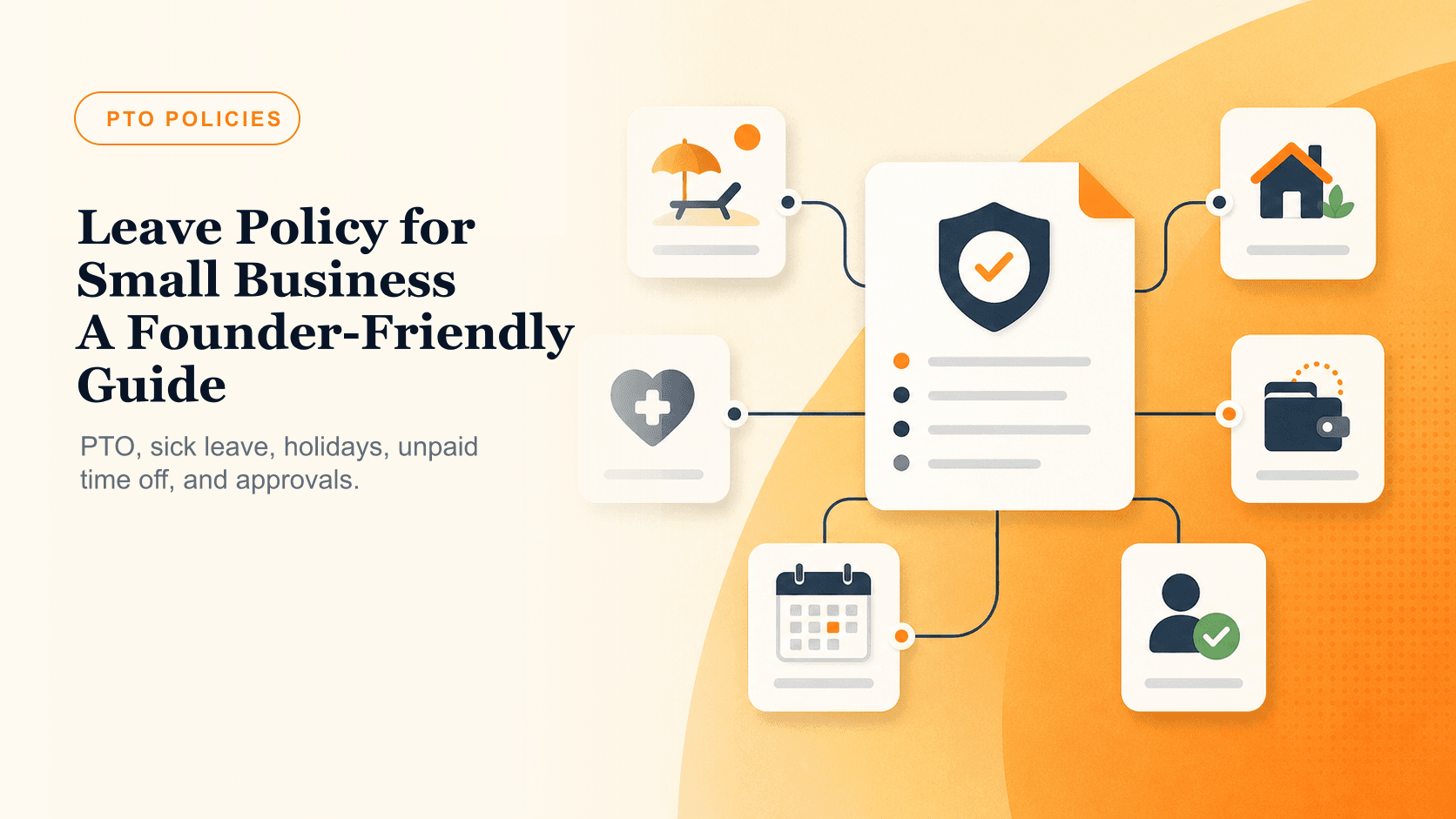
- A leave policy is broader than a vacation or PTO policy.
- It should explain paid time off, sick leave, unpaid leave, holidays, and protected leave.
- Keep legal-heavy categories separate from ordinary manager-approved time off.
- Small businesses need a clear approval workflow more than a long handbook chapter.
- Use the PTO policy guide for the paid-time-off section.
A leave policy gives employees and managers one place to understand time away from work.
For a small business, that clarity matters. Every absence affects coverage, but employees still need predictable rules for rest, illness, emergencies, and life events.
Leave policy vs. PTO policy
A PTO policy covers paid time off. A leave policy is broader.
It can include:
- Vacation or PTO.
- Sick leave.
- Paid holidays.
- Unpaid time off.
- Bereavement leave.
- Jury duty.
- Parental leave.
- Protected medical or family leave.
You do not need to write every section from scratch on day one, but employees should know where each category lives.
Start with ordinary time off
The most common requests are vacation, personal days, and sick days.
Define how much paid time employees receive, whether sick leave is separate, and how employees request approval. This is the everyday operating layer of the policy.
For the PTO portion, see paid time off policy for small business.
Add unpaid time off
Unpaid time off handles approved absences outside paid balances.
State whether employees must use available PTO first, who approves unpaid leave, and whether there is a maximum duration. Keep protected leave separate so managers do not accidentally treat legally protected absences like ordinary discretionary requests.
For more detail, use unpaid time off policy for small business.
Define holidays
List company holidays clearly. If employees work across states or countries, say whether holidays are based on location, headquarters, or a company-wide calendar.
If you offer floating holidays, define how they are requested and whether they expire.
Keep protected leave separate
Protected leave is not a place for improvisation. Depending on your size, location, and employee situation, federal, state, or local rules may apply.
Your policy can include a plain-language pointer:
Some leave types may be protected by federal, state, or local law. Employees should contact [HR/contact] for guidance on medical, family, pregnancy, military, disability-related, or other protected leave.
This is not a substitute for legal review, but it prevents the leave policy from pretending everything is manager discretion.
Make approvals and records clear
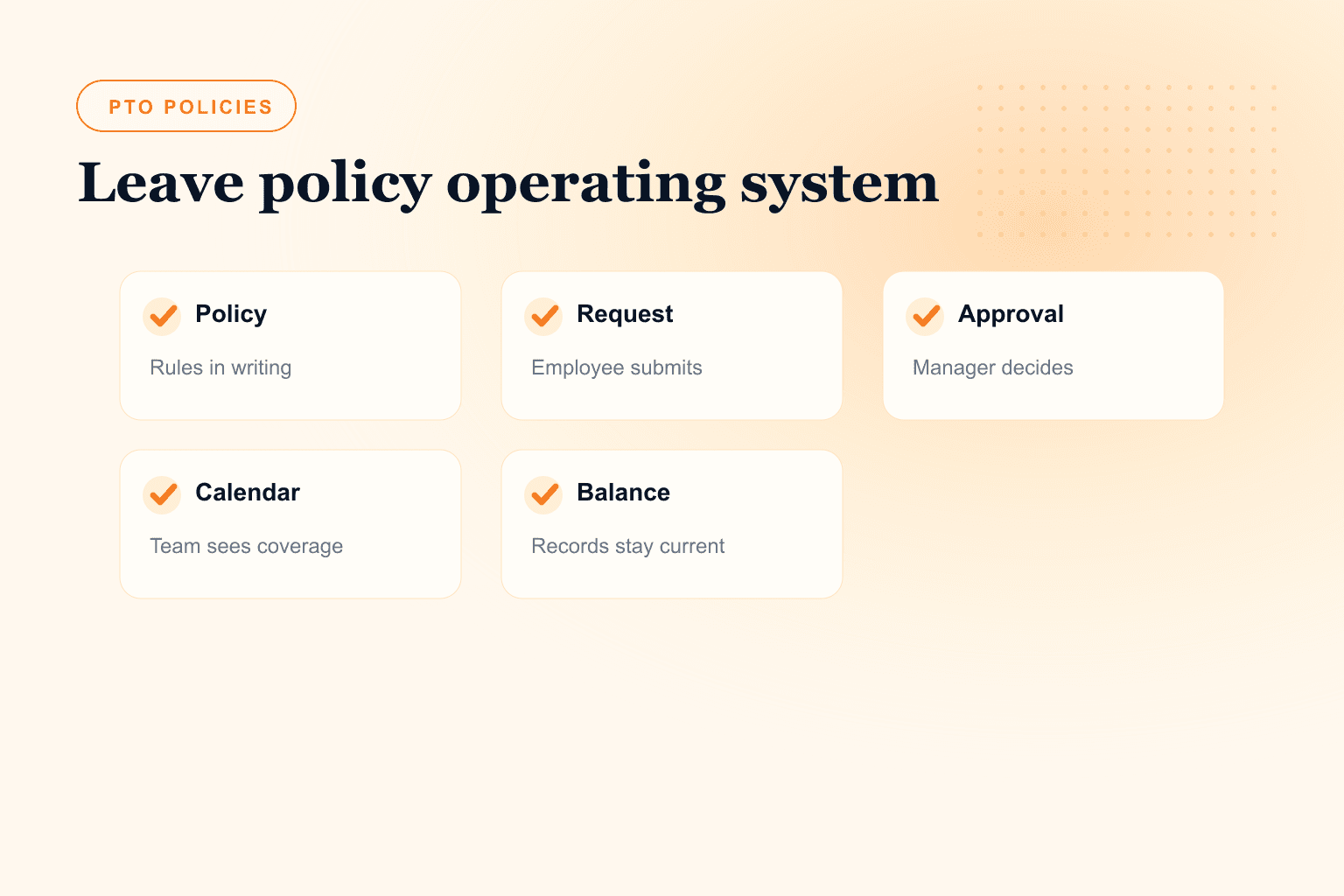
Every leave policy needs an operating system:
- Requests go somewhere specific.
- Approvals come from a named role.
- Approved absences appear somewhere managers can see.
- Balances update consistently.
- Exceptions are documented.
Without this, the policy depends on memory.
How Cabana handles this
Track leave without building an HR department.
Cabana helps small teams manage PTO requests, approvals, balances, and time-off visibility directly in Slack.
30 days · No credit card
Bottom line
A small-business leave policy should be complete enough to prevent confusion and simple enough to use. Cover the major leave categories, separate protected leave from ordinary requests, and make the approval workflow visible.